
Who Will Build, Repair, and Maintain America?
Miller Automotive LLC & TheAutomotiveSite.com
6/17/26
The Problem Everyone Feels but Few Quantify
Something feels different in America, even if most people cannot immediately explain why.
The signs are increasingly difficult to ignore. Scheduling service appointments often means longer waits than consumers expect. Home projects face delays as contractors struggle to secure labor. Construction projects increasingly encounter staffing-related disruptions. Repair costs continue climbing. Businesses advertise open positions for extended periods while struggling to find qualified applicants. Across industries, customers increasingly encounter delays, higher prices, and businesses operating with less capacity than demand requires.

For years, labor shortages were often described as temporary disruptions.
The pandemic was blamed. Retirement waves were blamed. Wage levels were blamed.
Each explanation contains some truth, yet none fully explains why workforce problems continue appearing years later across industries that, at first glance, seem unrelated.
The scale of the challenge suggests something larger may be happening.
In April 2026, the United States still reported approximately 7.6 million open jobs despite slower hiring activity and cooling portions of the labor market. Construction industry groups estimate hundreds of thousands of additional workers will be required simply to meet projected demand in the coming years. Meanwhile, surveys across multiple industries continue reporting difficulty filling skilled positions despite strong demand for labor.
The shortages are not isolated to one industry.
Homeowners experience it when HVAC systems fail during peak seasons and service capacity becomes constrained. Drivers encounter it when repair facilities push appointments further into the future because technician shortages limit available capacity. Communities experience it through delayed infrastructure projects, extended construction timelines, and utility projects competing for limited labor pools. Employers experience it through overtime costs, open positions, increased competition for workers, and shrinking applicant pools.
The consequences extend beyond inconvenience.
Delays increase costs.
Higher costs increase prices.
Projects that cannot be staffed cannot be completed.
Infrastructure that cannot be maintained deteriorates.
Businesses that cannot hire enough skilled workers frequently slow expansion, delay projects, or reduce service capacity.
For consumers, the shortage often appears as frustration.
For businesses, it appears as lost productivity.
For workers, it appears as opportunity—if enough people are willing and able to enter these careers.
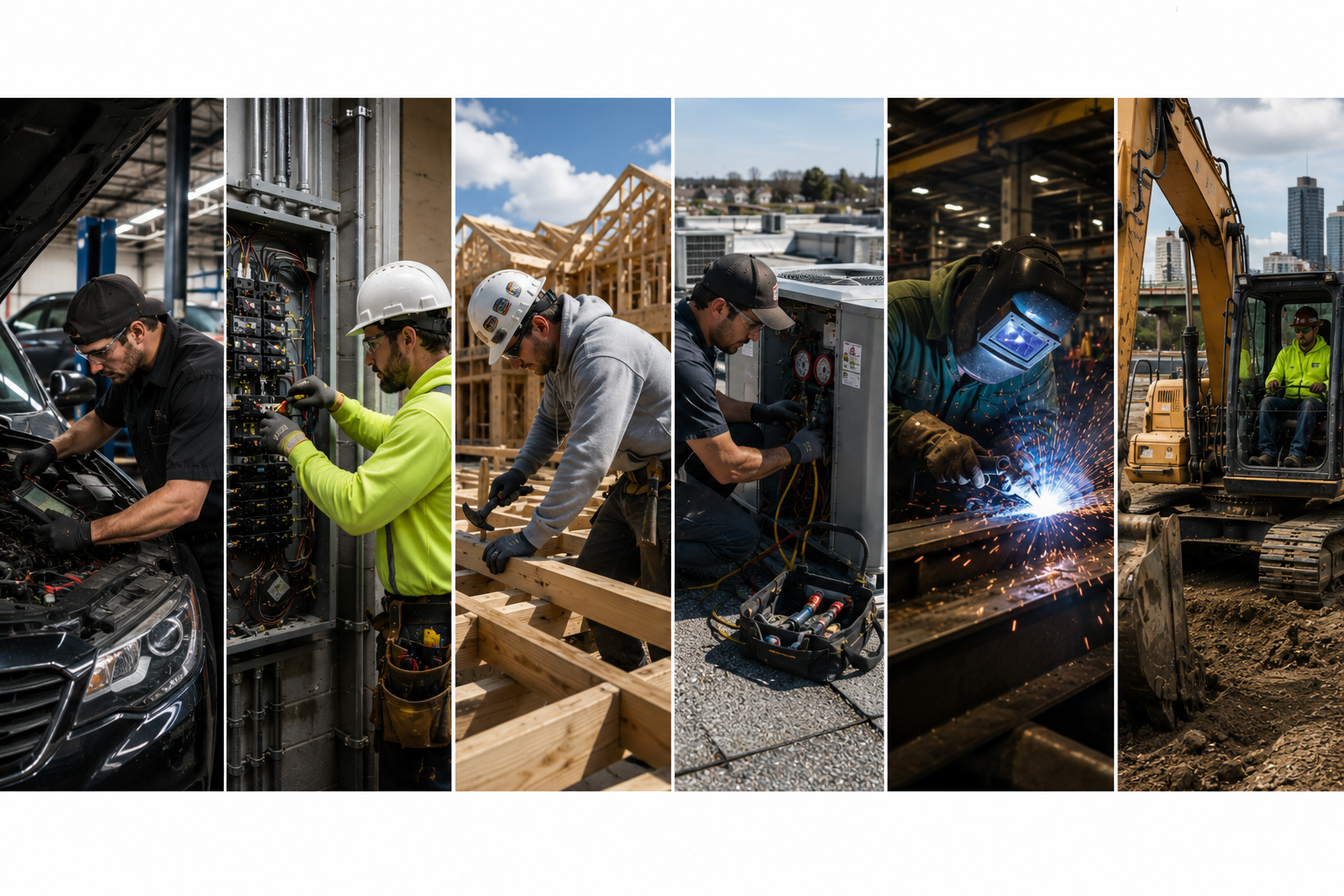
The evidence of strain has become increasingly visible.
Automotive repair facilities report technician shortages that directly affect operating capacity and scheduling. Construction firms routinely identify workforce availability as one of their largest barriers to project completion. Electrical contractors increasingly compete for experienced workers as demand expands across utilities, construction, energy projects, and digital infrastructure. Manufacturers continue warning about replacement challenges as experienced workers retire and technical skill requirements increase.
Across nearly every skilled trade, the same pattern continues to emerge: Demand remains strong while labor supply struggles to keep pace.
This raises a larger question. If nearly every trade is struggling to attract and retain workers, which industry is actually facing the worst shortage? The answer is more complicated than it first appears. Some industries face shortages because demand expanded faster than training systems could respond. Others face retirement waves that are removing decades of accumulated experience faster than replacements can be developed. Still others struggle not because workers fail to enter the field—but because they fail to stay.
Understanding which shortage is worst requires understanding what type of shortage each industry is actually experiencing. Because while Americans increasingly recognize there is a labor problem, far fewer have attempted to measure where the problem is most severe—or why so many skilled trades appear to be fighting remarkably similar battles at the same time.
Defining “Shortage

Before determining which trade faces the worst shortage, a more basic question must be answered first: what exactly qualifies as a shortage?
The term is used constantly by employers, trade organizations, educators, and politicians, yet it often means very different things depending on who is speaking. A contractor who cannot hire electricians may call it a shortage. A dealership with open technician positions may call it a shortage. A worker seeing stagnant wages may question whether a shortage exists at all.
Without defining the term, discussions about labor shortages quickly become opinion rather than analysis.
A true workforce shortage is not measured by a single statistic. It is measured through multiple indicators that, when viewed together, reveal whether an industry is producing enough workers to meet demand.
One of the simplest measurements is open positions. When employers consistently advertise jobs for extended periods without filling them, it suggests labor demand exceeds labor supply. However, open jobs alone can be misleading. Poor wages, geographic limitations, or unrealistic qualifications can also create vacancies.
Wage growth provides another important indicator. In theory, shortages should increase wages as employers compete for talent. If wages remain stagnant despite reported shortages, it raises questions about whether the issue is worker supply—or whether compensation structures have failed to adapt.
Time-to-fill metrics often reveal labor stress more clearly. If positions that historically required thirty days to fill now require sixty, ninety, or even one hundred eighty days, labor markets may be tightening. Delayed hiring creates secondary problems: overtime increases, productivity falls, burnout rises, and turnover often accelerates.
Retirement trends create another pressure point. Many skilled trades developed large workforces during periods of industrial growth in the 1970s, 1980s, and 1990s. Those workers are now retiring in large numbers. Industries with aging workforces face a difficult equation: replacing decades of accumulated knowledge requires years of training and experience that cannot be accelerated easily.
Training pipelines provide another useful measurement. Apprenticeship enrollment, vocational education participation, certification completions, and technical program enrollment help determine whether replacement workers are entering the field fast enough. If worker exits consistently exceed worker entries, shortages become increasingly difficult to reverse.
Retention may be the most overlooked measurement of all.
An industry that successfully recruits workers but fails to keep them has a different problem than an industry struggling to attract new entrants. Attrition rates, career longevity, and turnover frequently reveal whether shortages originate from recruitment failures or workplace conditions.
Demand projections must also be considered. Some industries face shortages not because they lost workers, but because demand increased faster than labor pipelines could respond. Infrastructure spending, housing demand, electrification, manufacturing expansion, and technological change can all rapidly increase workforce requirements.
These measurements reveal an important truth: labor shortages are not all the same.
Some industries suffer because too few workers enter the profession. Others struggle because workers leave faster than replacements arrive. Some industries have workers available—but not in the locations where demand exists. Others have applicants who lack the skills required for increasingly technical work.
Broadly speaking, most workforce shortages fall into four categories.
Entry shortages occur when not enough people enter the field.
Retention shortages occur when workers enter but fail to remain.
Skills shortages occur when workers exist, but lack required competencies.
Geographic shortages occur when labor supply and labor demand exist in different locations.
Understanding these distinctions matters because different problems require different solutions.
An industry suffering from poor recruitment needs different interventions than one suffering from high turnover. A shortage caused by retirement requires different solutions than one caused by rapid technological change.
The challenge, then, is not simply identifying which trade has the largest shortage.
The challenge is determining what type of shortage each industry is actually experiencing.
The Construction Crisis: When Demand Outruns Supply
If labor shortages are measured by scale alone, construction presents perhaps the strongest case for having the largest workforce challenge in America.
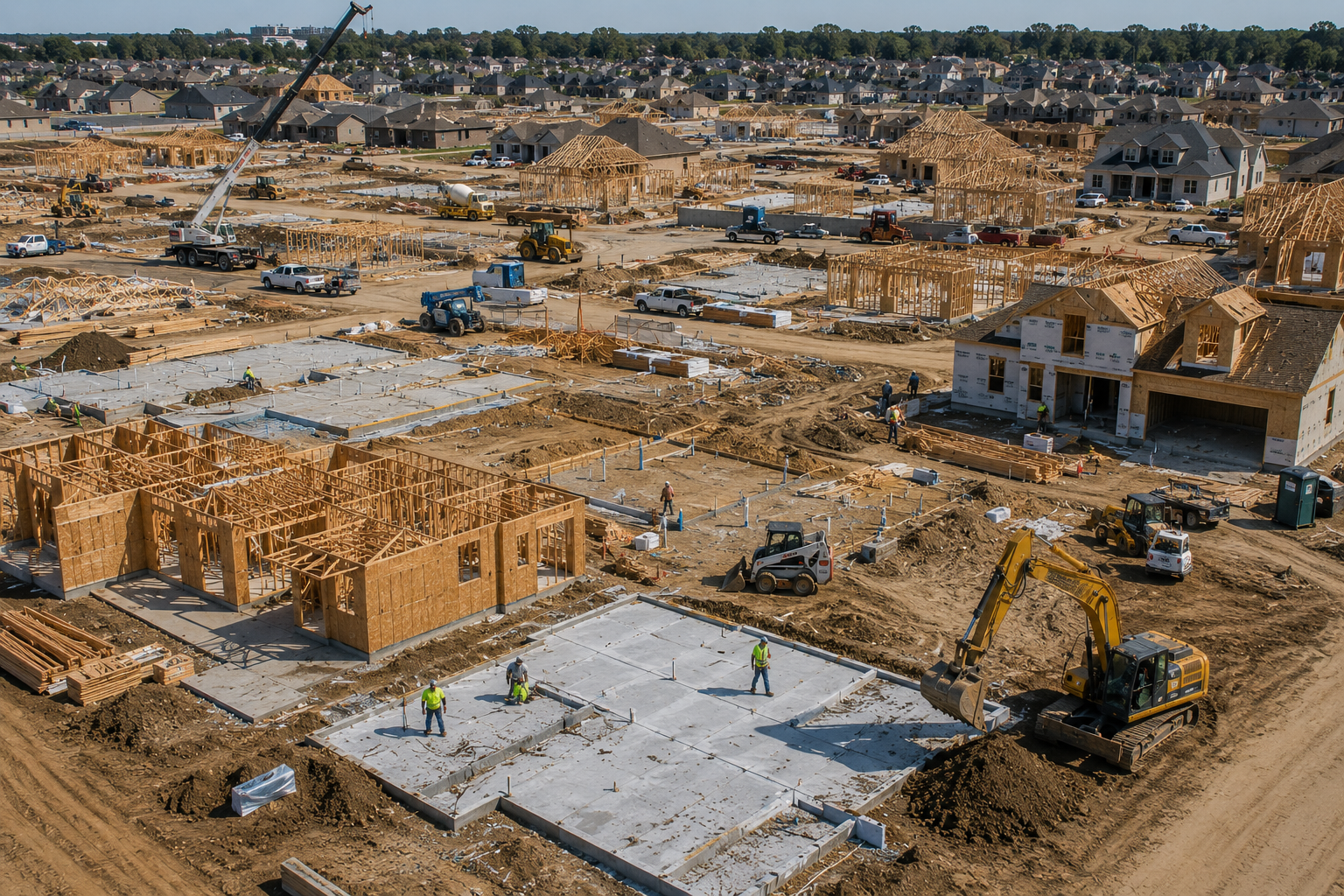
Construction shortages are not confined to one trade, one region, or one project type. They affect housing markets, commercial development, infrastructure projects, manufacturing expansion, and public utilities simultaneously. Unlike some workforce shortages that remain mostly invisible to the average person, construction shortages are visible almost everywhere: unfinished projects, delayed developments, rising housing costs, and increasingly expensive labor.
The housing market provides one of the clearest examples.
For years, economists, developers, and policymakers have pointed to a housing supply problem in the United States. Millions of additional housing units are needed simply to meet existing demand. Yet building homes requires labor-intensive trades that cannot be scaled overnight. Every new subdivision, apartment complex, or residential development competes for the same pool of framers, equipment operators, electricians, concrete crews, roofers, and general labor.
When housing demand rises faster than workforce growth, delays become inevitable.
The problem extends beyond housing.
Federal infrastructure spending has accelerated demand for construction labor across roads, bridges, utility systems, water infrastructure, manufacturing facilities, and energy projects. Large-scale public investments create jobs—but they also create competition for workers. A heavy equipment operator working on a highway project is unavailable for commercial construction. A concrete crew building infrastructure cannot simultaneously expand residential capacity.
This creates a fundamental challenge: construction labor is not infinitely expandable.
Demographics further complicate the situation.
Many experienced tradespeople who entered construction during periods of strong workforce growth in previous decades are now approaching retirement age. Carpenters, equipment operators, project supervisors, and skilled tradespeople with decades of experience are exiting the workforce faster than many employers can replace them.
Replacing these workers is difficult because experience compounds.
A carpenter with twenty-five years of experience is not simply performing physical labor. They understand sequencing, planning, troubleshooting, material behavior, jobsite coordination, safety practices, and mentoring. Much of that knowledge takes years—sometimes decades—to develop.
This creates pressure across nearly every segment of construction.
General construction labor remains difficult to recruit and retain because the work is physically demanding and often cyclical.
Carpenters face shortages because training takes time and apprenticeship pipelines have weakened.
Heavy equipment operators require specialized training, certifications, and practical experience that cannot be replaced quickly.
Concrete crews, essential to nearly every project type, face recruitment challenges due to physically demanding work and increasingly competitive labor markets.
Even when projects have financing, materials, and customer demand, labor increasingly becomes the bottleneck.
The result is a volume problem.
Construction may not have the highest turnover rates among the trades. It may not have the most technically complex entry pathways. But few industries face the same combination of simultaneous pressures: growing demand, aging workers, large-scale retirement risk, expanding infrastructure investment, and workforce pipelines struggling to keep pace.
This raises an uncomfortable question.
What happens when America needs more construction workers than it can produce?
The answer is already becoming visible. Projects take longer. Costs increase. Housing becomes less affordable. Infrastructure improvements slow.
And the industries competing for the same workforce become increasingly aggressive in attracting workers from one another rather than creating new ones.
Construction’s shortage is not merely a labor problem. It is a capacity problem. And capacity problems eventually affect everyone.
Electrical Trades: When the Future Competes for Labor
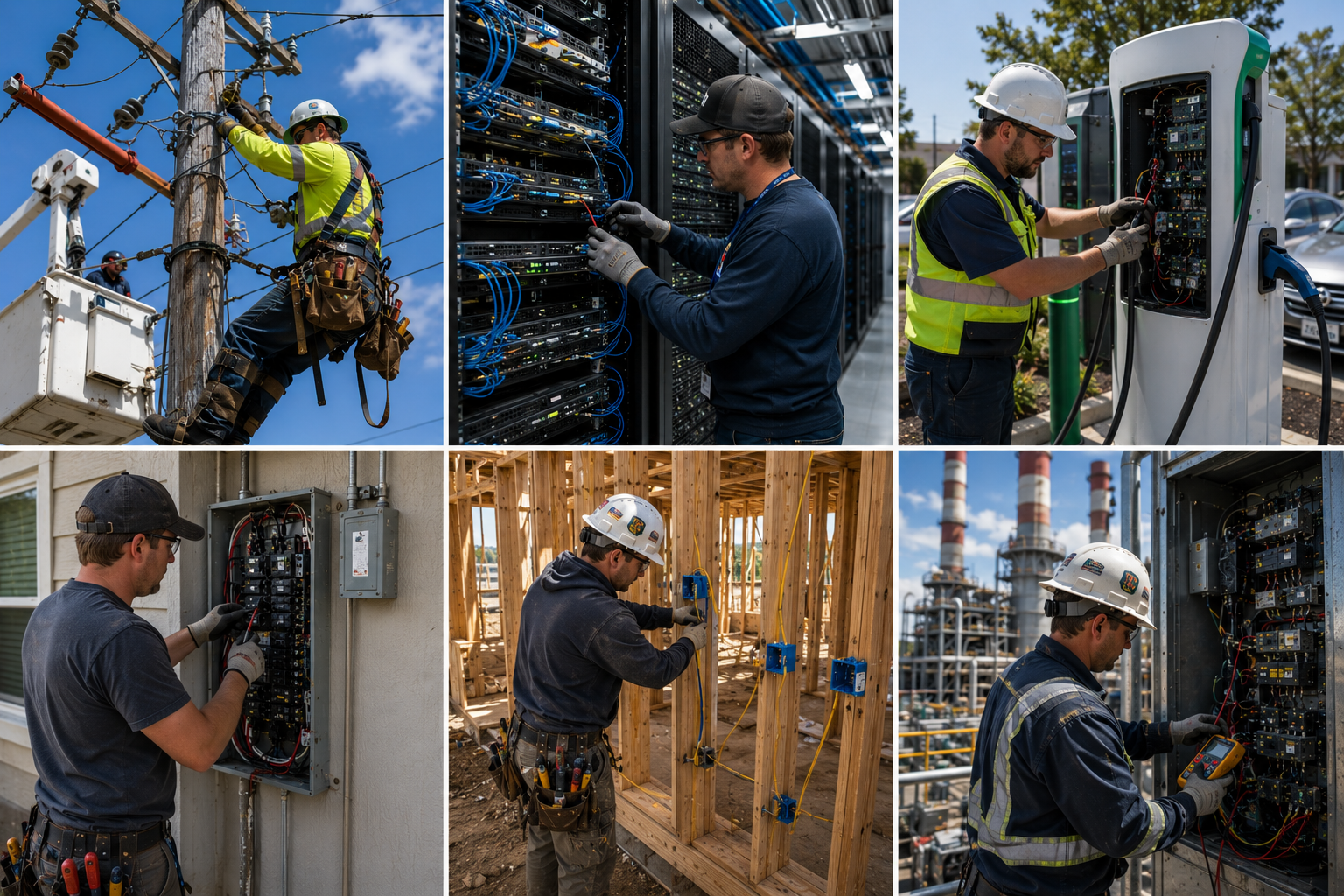
While construction faces a volume problem. Electrical trades face something different entirely.
Demand for electricians has not simply increased—it has expanded in multiple directions simultaneously. Housing construction, commercial development, industrial maintenance, and service work still require electrical labor just as they always have. What changed is that entirely new sectors of the economy are now competing for the same workforce.
Electricians are no longer competing only with other electricians. They are competing with the future economy.
Few occupations illustrate the collision between technological growth and workforce limitations more clearly than electrical trades. Over the last decade, multiple large-scale transitions began occurring at the same time: transportation electrification, renewable energy expansion, manufacturing reshoring, grid modernization, and explosive growth in digital infrastructure.
Each of these trends creates enormous labor demand. Together, they create workforce competition on a scale the industry has rarely experienced. Electric vehicle adoption provides one example.
EV charging infrastructure requires electricians for residential installations, commercial charging networks, fleet charging systems, utility upgrades, and maintenance. Charging stations may appear simple from the consumer perspective, but large-scale deployment requires significant electrical capacity, permitting, installation labor, and ongoing service support.
At the same time, America’s electrical grid itself requires modernization.
Much of the nation’s transmission and distribution infrastructure was designed decades ago around different energy consumption patterns. Grid hardening projects, utility expansion, substation upgrades, renewable integration, and resilience improvements require enormous investments in electrical labor. Expanding generation capacity means little if distribution systems cannot support increased demand.
Then there is renewable energy.
Solar, battery storage, wind generation, and distributed energy systems have created additional demand for workers with electrical skills. Unlike some previous energy transitions, these technologies do not replace electrical labor—they often increase it. Installation, commissioning, troubleshooting, and maintenance all require specialized knowledge.
But perhaps the newest demand driver is also the least visible. Data centers and AI infrastructure.
Artificial intelligence, cloud computing, streaming services, digital storage, and increasingly connected systems require physical infrastructure: massive facilities consuming enormous amounts of power. These facilities require electrical contractors, utility upgrades, power distribution systems, backup generation, cooling systems, and long-term maintenance.
The public often sees AI as software. The workforce challenge behind AI is frequently electrical. This demand surge arrives at a difficult time.
Like many skilled trades, the electrical workforce is aging. Experienced journeymen, foremen, estimators, and supervisors are retiring while apprenticeship pipelines struggle to expand quickly enough to replace them. Training new electricians takes years, not months. Licensing requirements, apprenticeship structures, safety standards, and practical experience create barriers that protect quality—but also slow workforce expansion.
This creates a unique labor dynamic. A residential contractor needs electricians. A utility company needs electricians. A manufacturing plant needs electricians. A solar installer needs electricians. A data center needs electricians. An EV charging company needs electricians.
Increasingly, they are competing for the same people. Unlike shortages driven primarily by worker attrition or poor retention, electrical trades face a demand explosion problem. The workforce itself did not suddenly collapse. Instead, demand accelerated faster than training systems were designed to respond. This distinction matters.
Industries with recruitment problems can sometimes solve shortages by attracting more entrants.
Industries experiencing simultaneous demand expansion face a harder challenge: they must expand workforce capacity while demand continues increasing. The result is that electrical shortages may become one of the most consequential labor constraints of the coming decade. Because increasingly, building the future depends on electrical labor. And the future appears to need more electricians than the current system is prepared to produce.
Plumbing and HVAC: The Invisible Infrastructure Problem
Most infrastructure is easy to ignore until it stops working.
Electricity flows when switches are flipped. Water arrives when faucets turn on. Air conditioning cools homes during summer. Heating systems operate quietly in the background. Modern life depends on countless systems functioning correctly—and because they usually do, most people rarely think about the workers responsible for maintaining them.
Until something fails.
When an air conditioning system stops working during a heat wave, shortages become visible immediately. When plumbing failures shut down homes or businesses, labor shortages become personal very quickly. Unlike some industries where workforce problems emerge gradually, shortages in plumbing and HVAC often reveal themselves through discomfort, disruption, and urgency.
These trades occupy a unique position within the skilled labor market because demand rarely disappears. Homes age. Buildings require maintenance. Equipment fails. Weather creates emergencies. And increasingly complex systems require workers with expanding technical knowledge. Part of the challenge comes from training requirements.
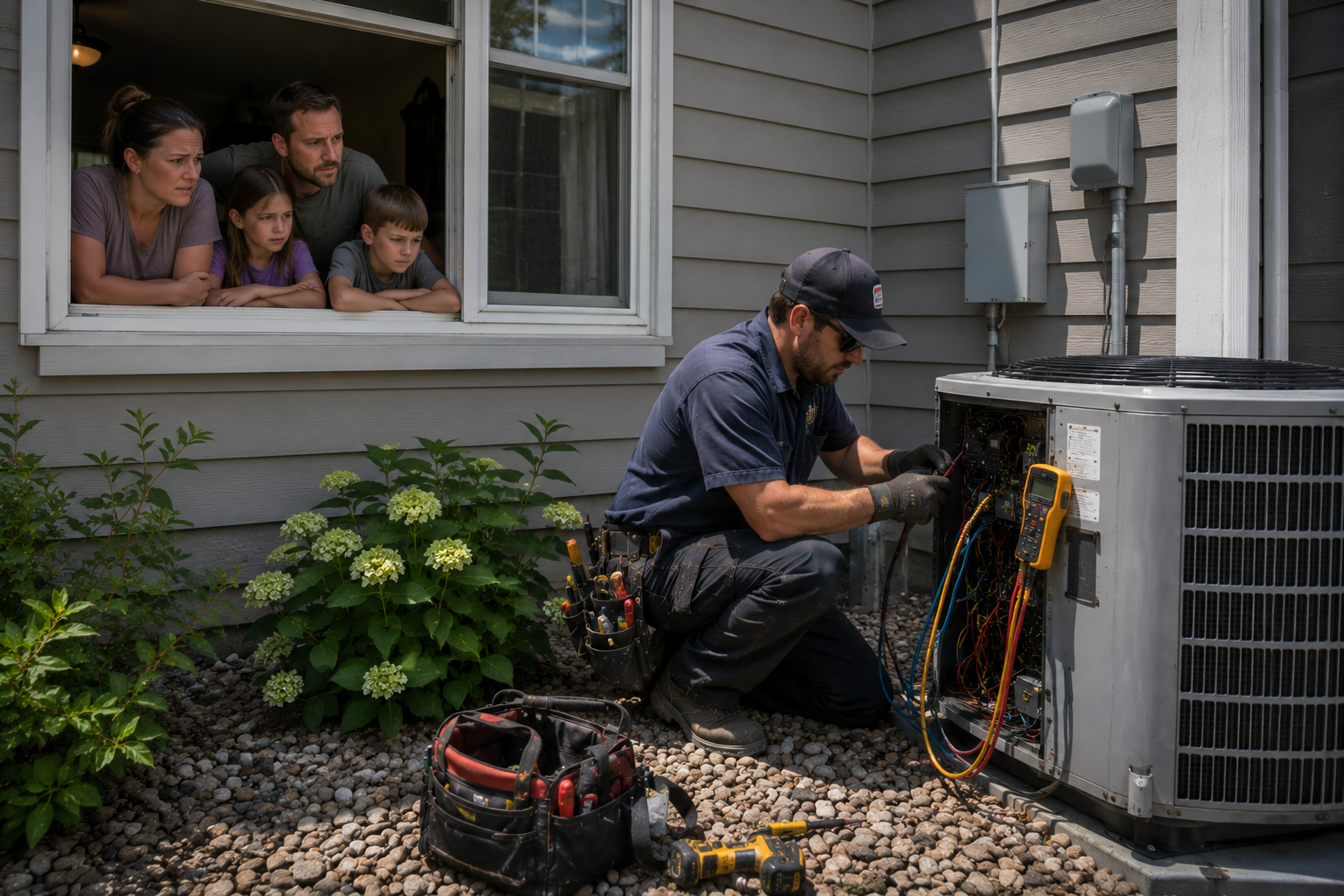
Both plumbing and HVAC maintain licensing structures, certification requirements, and apprenticeship pathways designed to protect consumers and maintain quality standards. These systems provide important safeguards, but they also lengthen workforce development timelines. Producing a fully capable technician or licensed tradesperson requires years of training, supervised experience, and practical exposure.
Long pipelines create workforce inertia.
When shortages begin developing, labor supply cannot rapidly increase because new workers require significant time to become productive.
Complexity adds another layer of difficulty.
Modern HVAC systems bear little resemblance to many systems installed decades ago. High-efficiency equipment, communicating controls, variable-speed technology, building automation systems, heat pumps, refrigerant transitions, smart home integration, and increasingly strict efficiency standards have expanded technical requirements dramatically.
Plumbing systems have experienced similar changes.
Water conservation technologies, modern materials, code revisions, advanced fixtures, water treatment systems, and larger commercial system requirements continue increasing knowledge expectations for technicians and installers.
Workers entering these trades are no longer learning only mechanical systems.
Increasingly, they are learning mechanical systems integrated with electronics, controls, software, diagnostics, and regulation.
Climate trends further increase demand pressure.
Warmer temperatures create greater cooling demand. Population growth expands residential service requirements. Severe weather events increase repair activity. Aging housing stock requires more maintenance. Regions experiencing rapid growth require additional installation capacity at the same time they struggle to maintain existing systems.
This creates overlapping demand cycles. New construction requires labor. Service work requires labor. Emergency repairs require labor. Replacement work requires labor. The same workforce must support all of them simultaneously. Service demand creates perhaps the greatest challenge.
Unlike some industries where projects can be delayed, plumbing and HVAC failures often require immediate response. Consumers may postpone renovations or elective purchases, but they rarely choose to wait weeks without air conditioning during summer or functioning plumbing systems.
Because comfort systems fail. Water systems fail. And when they do, customers expect solutions quickly. This makes shortages highly visible.
Longer appointment wait times, higher emergency service costs, reduced maintenance availability, and overloaded technicians become difficult for consumers to ignore. In many markets, businesses increasingly rely on overtime, extended schedules, and emergency prioritization simply to maintain service levels.
The workforce problem facing plumbing and HVAC is not solely recruitment.
It is a combination of long training cycles, growing technical complexity, expanding service demand, and infrastructure that cannot simply pause when labor becomes scarce.
These industries exist in the background when everything works correctly.
When shortages emerge, they quickly move to the foreground.
Manufacturing, Welding, and Industrial Trades: The Automation Paradox
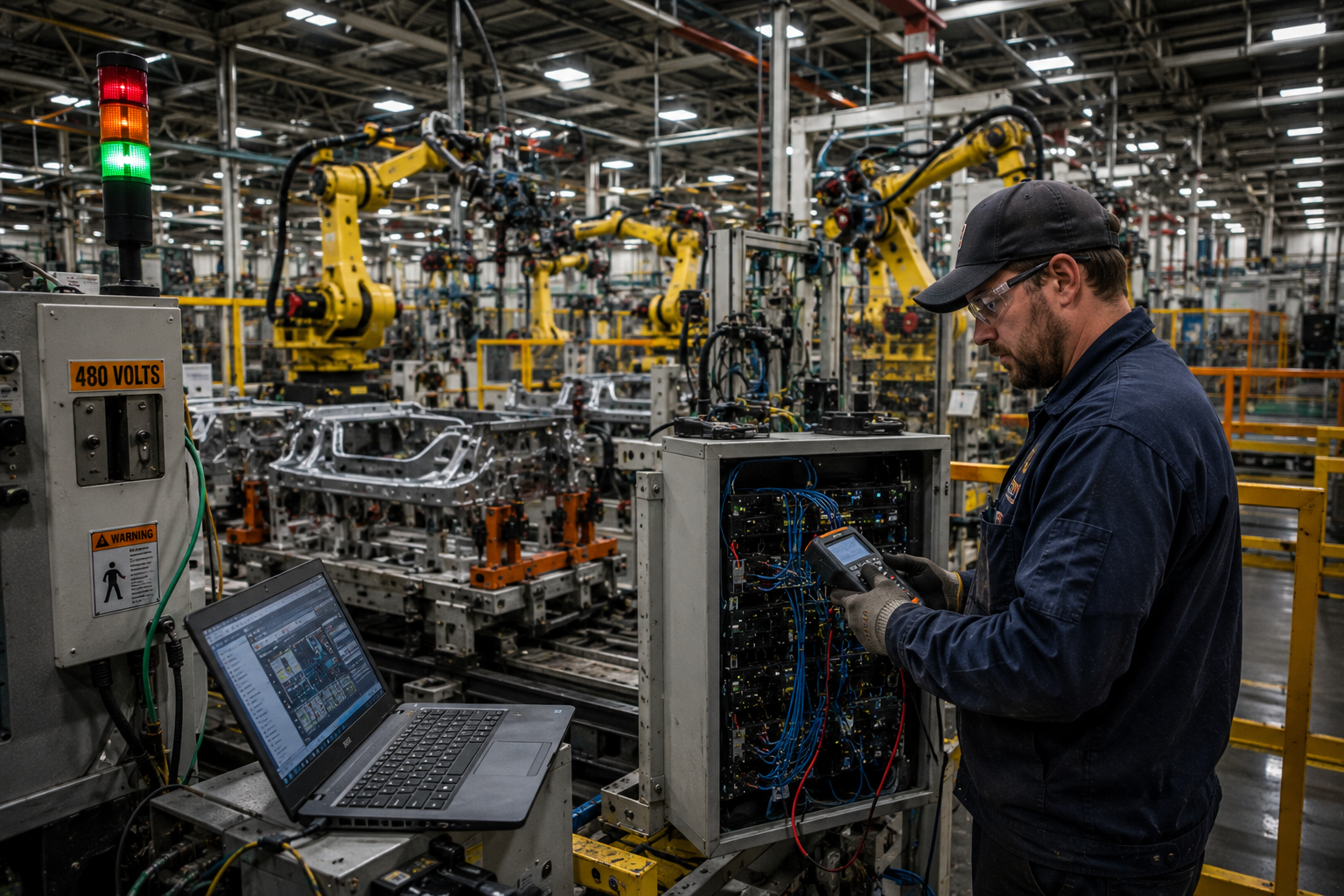
For decades, automation was often presented as the solution to labor shortages. Build more robots. Install more automation. Increase efficiency. Reduce labor dependence.
In theory, this sounds straightforward. In practice, modern manufacturing reveals something more complicated.
Automation rarely eliminates labor requirements entirely. More often, it changes the type of labor required—and frequently increases demand for workers with specialized skills.
Manufacturing sits at the center of this contradiction.
Over the last several years, reshoring efforts, supply chain disruptions, geopolitical concerns, and industrial policy have renewed interest in domestic manufacturing capacity. Companies that once prioritized overseas production increasingly discuss resilience, redundancy, and local production capabilities.
Building more domestic capacity, however, requires workers.
Factories require electricians, welders, industrial maintenance technicians, automation specialists, machinists, fabricators, operators, and controls technicians.
Expanding industrial capacity creates labor demand across multiple trades simultaneously.
Welding illustrates part of the challenge.
Welding shortages have existed for years, driven partly by retirement demographics and partly by declining entry pipelines. Experienced welders often possess highly specialized knowledge tied to specific industries, materials, certifications, and processes. Replacing that expertise requires substantial training and practical experience.
Many industrial employers face a similar demographic challenge.
Large portions of the manufacturing workforce entered industry during previous decades of industrial growth and are now approaching retirement age. These workers are not simply leaving positions behind—they are taking institutional knowledge with them.
Knowledge accumulated over decades rarely transfers automatically.
This creates increasing pressure on industrial maintenance roles.
Modern manufacturing facilities depend on uptime. Equipment failures are expensive. Downtime interrupts supply chains, delays shipments, increases costs, and reduces profitability. As facilities become more automated, maintenance complexity often increases rather than decreases.
Industrial maintenance technicians increasingly require overlapping competencies:
Mechanical systems, electrical systems, controls systems, hydraulics and pneumatics, diagnostics, networking, programmable logic controllers, software interfaces, and troubleshooting.
The modern maintenance technician often resembles a multi-disciplinary specialist more than a traditional mechanic.
Automation amplifies this trend.
Robotics, advanced manufacturing systems, automated warehouses, and intelligent production lines require installation, programming, maintenance, calibration, and repair. Every robot installed creates future maintenance requirements. Every automated production line creates dependency on workers capable of keeping it operational.
This creates an important question.
Can automation solve a shortage when there are not enough people to install and maintain the automation?
The answer increasingly appears to be: only partially. Automation can improve productivity. Automation can reduce repetitive work. Automation can increase output. But automation itself becomes infrastructure that requires support.
A factory cannot automate its way out of maintenance shortages if maintenance labor becomes the bottleneck. This creates what might be called the automation paradox.
Industries adopt technology to reduce workforce constraints, but increasingly sophisticated technology creates demand for more specialized labor.
Manufacturing therefore faces multiple workforce pressures simultaneously:
An aging workforce, expanding domestic production goals, increasing technical complexity, growing maintenance demands, and labor pipelines struggling to keep pace with changing skill requirements.
Unlike shortages driven primarily by labor volume or immediate service demand, manufacturing shortages increasingly revolve around specialization.
The question is no longer simply whether enough workers exist.
It is whether enough workers exist with the right skills to support increasingly complex systems.
And as automation expands, that question becomes more important—not less.
Automotive Technicians: A Different Kind of Workforce Crisis
After examining construction, electrical trades, plumbing, HVAC, manufacturing, and industrial labor, an important pattern begins to emerge.
Most industries face shortages because demand increased, workers retired, or training pipelines weakened. Automotive faces those challenges too. But automotive adds several additional layers of complexity that make its workforce problem fundamentally different. This does not necessarily mean automotive has the largest shortage. It may mean automotive has the most structurally difficult shortage.
Unlike construction, automotive labor demand is not primarily driven by large infrastructure projects or population growth. Unlike electrical trades, automotive technicians are not experiencing a sudden demand explosion caused by entirely new industries. Unlike manufacturing, the challenge is not solely increasing specialization.
Automotive combines elements of all of these problems simultaneously while introducing additional barriers that many other skilled trades do not face.
The first barrier appears before many technicians ever enter the workforce: Tool ownership.
Most skilled trades require some personal investment. However, automotive technicians frequently assume responsibility for thousands—or tens of thousands—of dollars in tools early in their careers. Young technicians often accumulate significant expenses before reaching peak earning potential, increasing financial pressure during the exact period when retention is most fragile.
Compensation structures create another challenge.
While many skilled trades primarily utilize hourly wages, salaries, union scales, or structured apprenticeship progression, automotive frequently relies on flat rate compensation systems. Under flat rate, compensation is often tied to labor production rather than hours worked. Highly productive technicians can perform extremely well financially, but income variability creates uncertainty—particularly for newer technicians still developing skills.
Retention becomes increasingly difficult when compensation feels unpredictable.
Technology further complicates the equation.
Vehicles have always evolved, but modern vehicles increasingly require overlapping competencies once associated with multiple industries. Technicians now routinely encounter advanced electronics, networking systems, driver assistance technologies, software diagnostics, electric propulsion systems, high-voltage systems, telematics, and increasingly sophisticated data-driven diagnostics.
The modern technician often resembles multiple specialists combined into one profession. Training systems have struggled to adapt.
Educational institutions frequently face challenges keeping pace with rapidly changing vehicle technologies, equipment requirements, and manufacturer-specific systems. Employers frequently report graduates entering the workforce lacking practical experience, while educators frequently report difficulty obtaining resources, equipment, and industry support.
This creates a pipeline problem that extends beyond recruitment. Workers enter. Workers struggle. Workers leave. Comparing workforce challenges across industries highlights why automotive may represent a uniquely difficult problem.
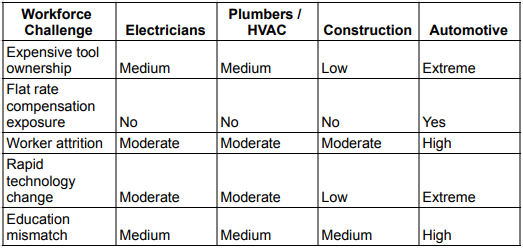
That distinction matters because retention problems are harder to solve than recruitment problems. Recruitment problems can sometimes be addressed through marketing, awareness campaigns, or expanding educational pathways. Retention problems force industries to examine compensation models, mentoring structures, workplace culture, training systems, and career sustainability.
Automotive therefore presents an unusual workforce challenge.
The question is not simply whether enough people are entering the profession. The question is whether the profession itself is structured to keep enough people once they arrive. And that may be a much more difficult problem to solve.
What Broke the Pipeline?
After examining multiple industries, one conclusion becomes increasingly difficult to avoid. The shortages themselves may look different. The causes often look remarkably similar.
Construction faces volume problems. Electrical trades face explosive demand growth. Manufacturing faces specialization challenges. Automotive struggles with retention. Plumbing and HVAC fight long training cycles and expanding technical complexity.
Yet beneath those differences sits a larger question. Why did so many skilled labor pipelines weaken at roughly the same time? The answer is unlikely to be one decision, one policy, or one generation. More often, workforce systems fail gradually. Then suddenly.
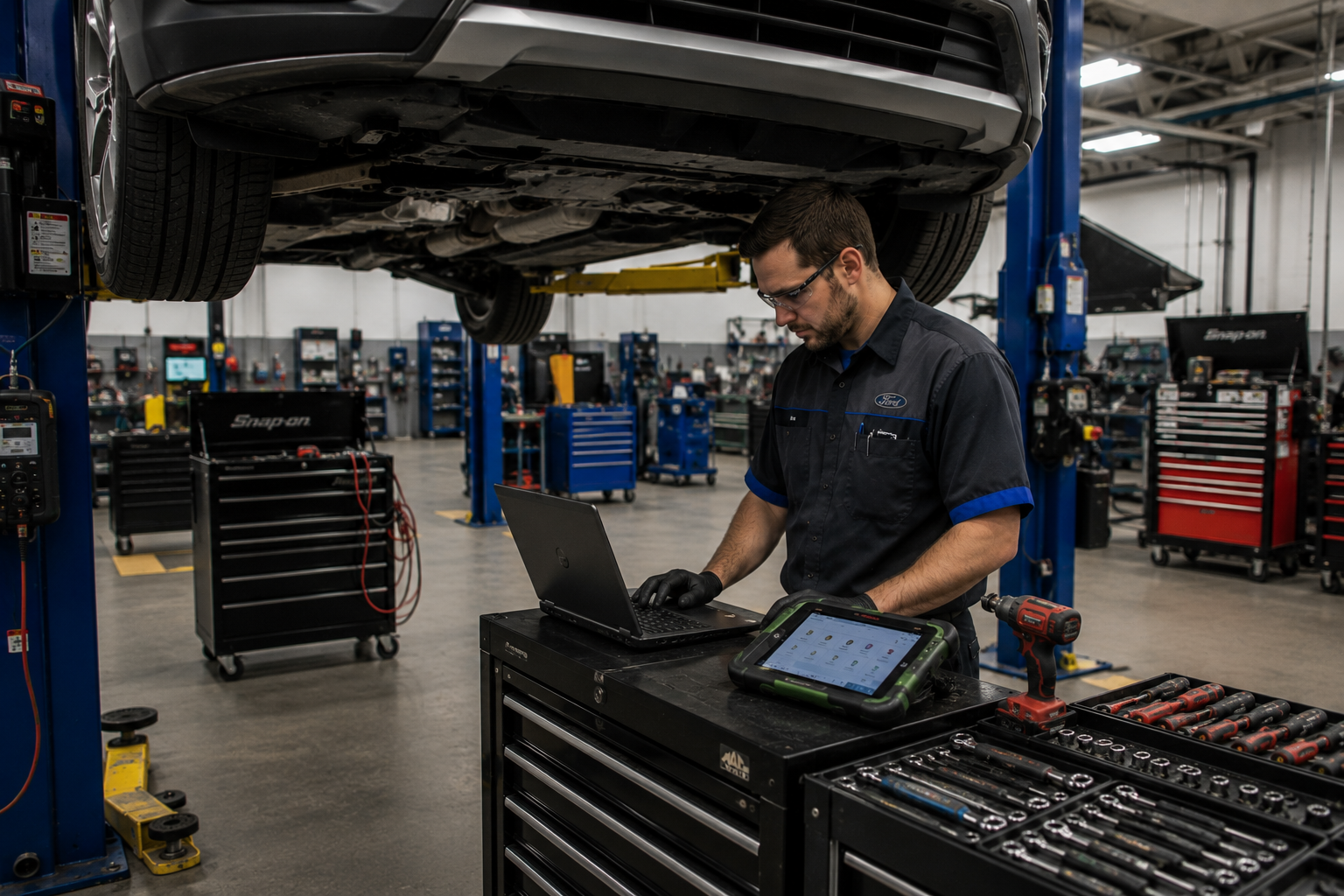
Viewed individually, none of these factors fully explain the shortage. Viewed together, they create compounding pressure.
A new technician entering automotive may face expensive tool purchases, rapidly changing technology, inconsistent early-career income, complex diagnostic expectations, and educational gaps—all while competing against industries that increasingly offer more predictable compensation structures.
This helps explain why automotive shortages often feel different. Many industries primarily struggle to create workers. Automotive frequently struggles to keep them.
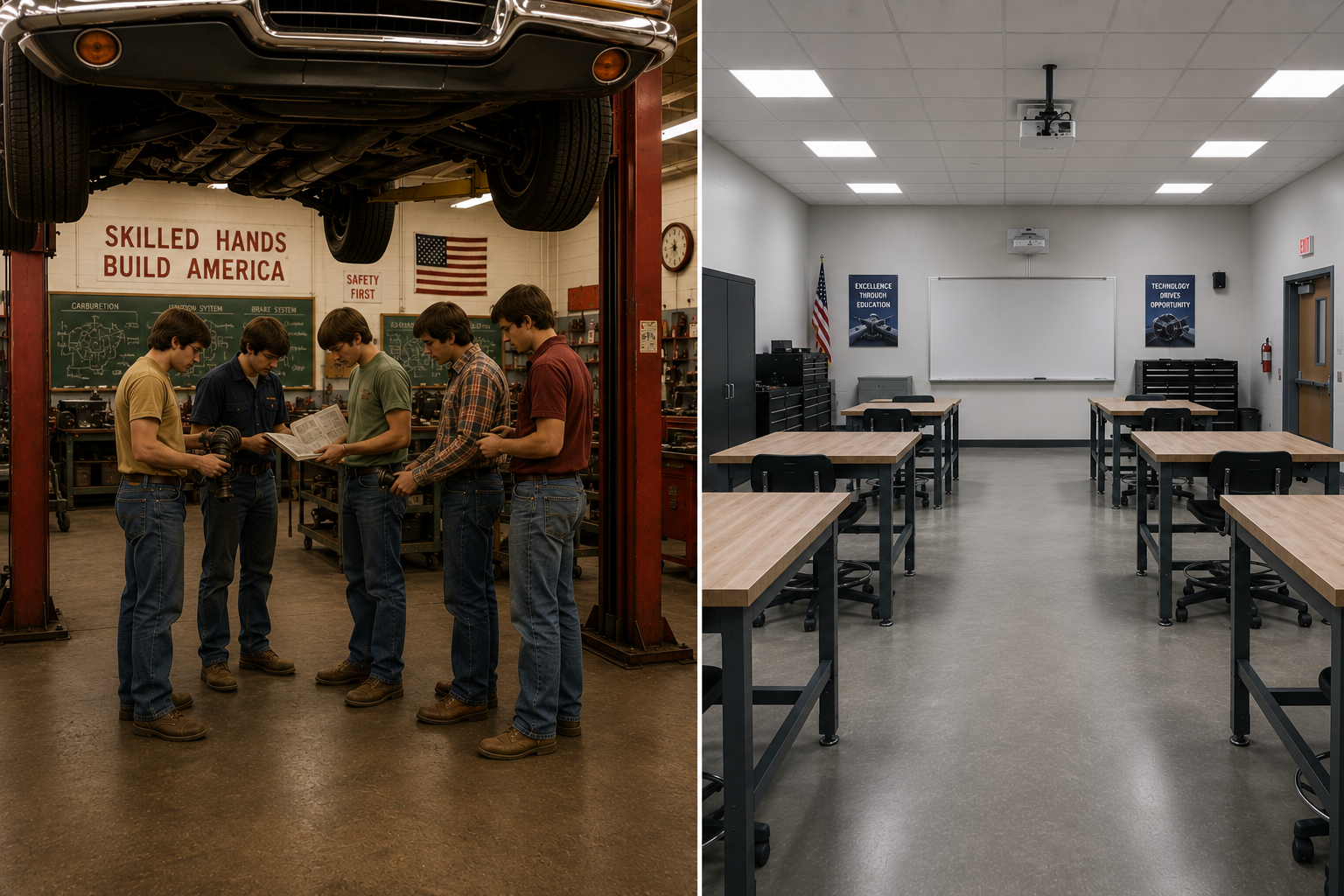
Cultural Shifts: When Career Messaging ChangedFor decades, American education increasingly emphasized a simple message: Go to college. This message was not entirely wrong. Higher education expanded opportunities for millions of people and created pathways into professions that previously lacked accessibility. But workforce systems rarely operate without tradeoffs.
As college attendance became more heavily emphasized, alternative pathways often became less visible. Shop programs declined. Career and technical education lost funding in many districts. Students increasingly received messaging that professional success followed a narrower path than previous generations experienced.
At the same time, social perceptions changed.
Many skilled trades became associated with physical labor rather than technical expertise. Occupations that increasingly required advanced diagnostics, controls knowledge, electronics, software literacy, and problem solving were often still presented through outdated stereotypes.
This created a perception gap. The work changed. Public perception often did not.
Economic Shifts: Efficiency Replaced RedundancyModern businesses became significantly more efficient.
Lean staffing models reduced excess labor. Companies focused on productivity improvements, cost control, and operational efficiency. Outsourcing shifted portions of manufacturing and production overseas. Training investments increasingly moved from long-term workforce development toward shorter-term operational needs.
These decisions often made sense individually. Collectively, they reduced workforce resilience.
Many industries gradually shifted away from building large internal talent pipelines. Apprenticeship systems weakened in some sectors. Mentorship became harder to support when experienced workers managed larger workloads. Staffing models optimized for efficiency frequently left little capacity for training.
Efficiency created productivity gains. It also reduced slack within workforce systems. When retirements accelerated or demand increased, many industries discovered there was little reserve capacity remaining.
Structural Shifts: The Mentor GapWorkforce development depends heavily on knowledge transfer. This becomes difficult when experienced workers leave faster than replacements arrive.
Many industries now face overlapping demographic pressures: experienced workers are retiring while fewer mid-career workers exist to replace them. In some sectors, entire layers of institutional knowledge are disappearing within relatively short periods of time.
Mentorship capacity declines as this happens. Fewer experienced workers means fewer trainers. Fewer trainers means fewer productive apprentices. Fewer productive apprentices means slower workforce replacement. The cycle reinforces itself.
Additionally, training itself became more expensive. Equipment costs increased. Technology costs increased. Facility costs increased. Certification requirements expanded. Complex systems required more specialized instruction. Developing skilled workers increasingly requires greater investment at exactly the time many organizations reduced training capacity.
Educational Shifts: Pipelines Lost ConnectivityEducational systems and industry systems increasingly drifted apart. Many employers argue graduates lack practical readiness. Many educators argue they lack sufficient industry support. Both perspectives may be partially correct.
Curriculum updates often struggle to match rapidly changing technologies. Equipment budgets frequently lag behind industry changes. Industry advisory groups sometimes exist on paper but contribute inconsistently. Work-based learning opportunities vary dramatically by region and employer participation.
Even when programs function well, transitions frequently remain fragmented. Students complete training programs but struggle to enter industry. Employers report shortages while overlooking inexperienced applicants. Graduates encounter barriers gaining experience because entry-level opportunities have narrowed.
Pipelines become inefficient when transition points fail.
The Pipeline Problem Is Not One ProblemLooking across industries reveals something important. America did not break one workforce pipeline. It weakened multiple interconnected systems simultaneously.
Cultural messaging reduced awareness.
Economic pressures reduced training investment.
Structural changes weakened mentorship.
Educational systems struggled to maintain alignment.
Then demand increased.
Then retirements accelerated.
Then technological complexity expanded.
The result is the workforce environment visible today. Labor shortages across nearly every skilled trade. Understanding this distinction matters because solving pipeline failures requires more than recruiting campaigns or short-term incentives. The shortage problem was built over decades. Which means rebuilding workforce systems will likely require the same long-term thinking that many industries gradually abandoned.
Why Throwing Money at It Hasn’t Worked
When labor shortages become severe, the first solution is usually predictable: Raise wages. Offer bonuses. Increase benefits. Recruit harder.
At first glance, these responses make sense. Labor markets are often described through supply and demand. If workers are scarce, employers increase compensation. Higher compensation attracts more workers. Shortages improve.
Except many skilled trades have already tried versions of this approach. Yet shortages remain. This raises an uncomfortable possibility.
What if labor shortages persist not because industries failed to spend money—but because they spent money solving the wrong problems? Compensation matters. It matters enormously. Workers who are underpaid leave industries. Low wages discourage entry. Uncompetitive compensation structures reduce retention and recruitment simultaneously.
But compensation alone rarely explains why shortages continue across multiple industries despite increasing labor costs. Wage growth illustrates this challenge.
Many skilled trades have experienced significant compensation increases over the last decade. Employers routinely advertise higher wages than previous generations experienced. Overtime opportunities increased. Competition for experienced workers intensified. Yet hiring difficulties persist.
Part of the reason is that wages primarily influence attraction. They do not automatically improve retention. A worker who enters an industry and leaves two years later still contributes to shortages regardless of starting pay. Sign-on bonuses reveal similar limitations.
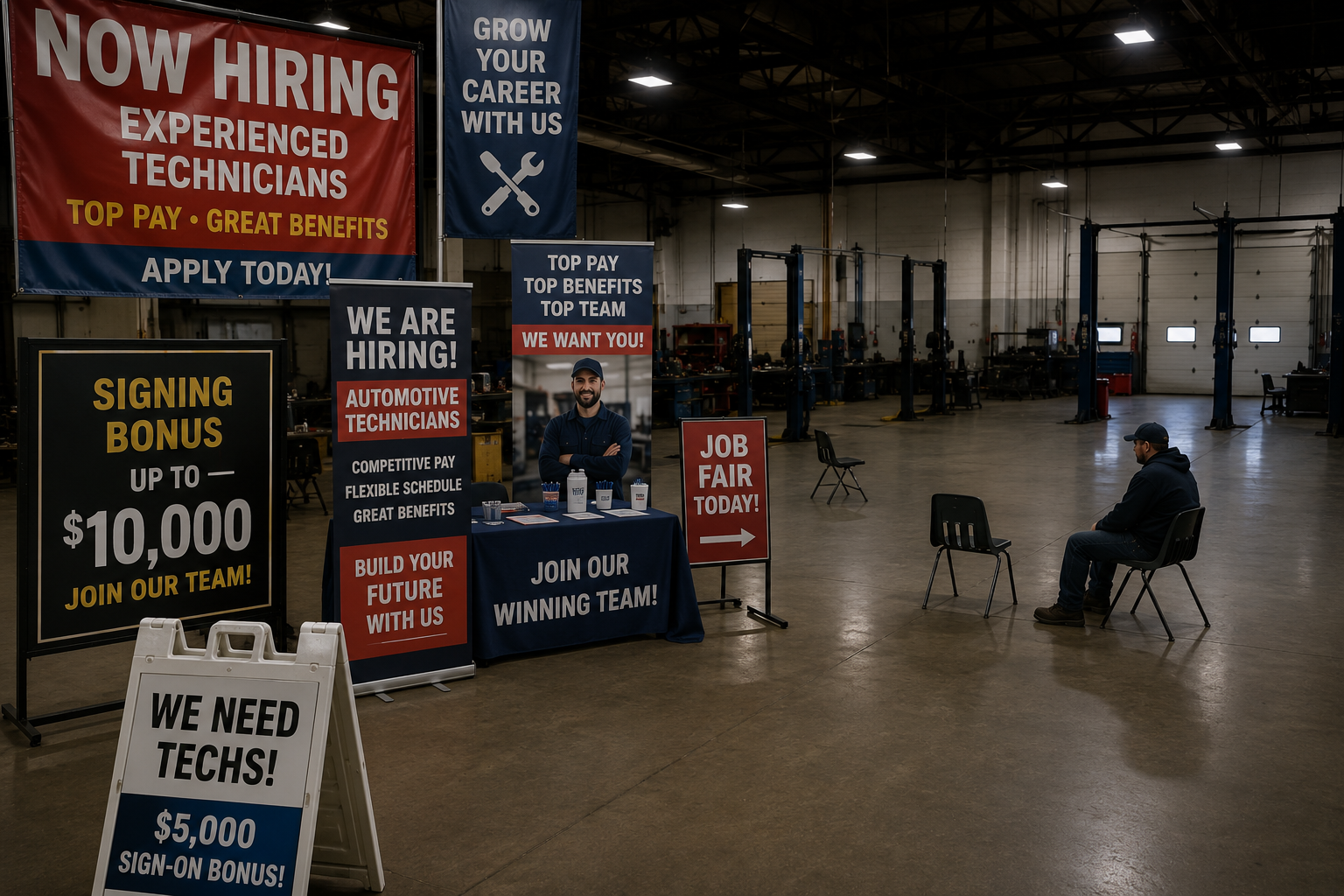
Bonuses generate attention quickly because they create visible incentives. Employers increasingly advertise hiring bonuses, referral bonuses, retention bonuses, and accelerated onboarding incentives.
These programs often improve applicant flow. They do not necessarily improve long-term workforce stability. A worker motivated primarily by a signing incentive can often be recruited away again when another employer offers a larger incentive. Short-term recruitment tools frequently create labor movement rather than labor growth.
Tool programs emerged as another common solution. Particularly in technical trades requiring substantial personal investment, employers increasingly offer starter tool sets, reimbursement programs, discounted purchasing programs, or tool allowances. These programs help reduce financial barriers. But tools alone rarely solve larger problems involving workplace culture, compensation models, mentorship quality, career progression, or work-life balance.
Reducing entry costs helps workers start. It does not always help them stay.
Tuition reimbursement programs create similar outcomes. Educational assistance lowers barriers to entry and can expand access to technical training. Many employers partner with schools, sponsor apprenticeships, or reimburse education expenses.
These investments matter. But workforce pipelines remain vulnerable when graduates enter workplaces that struggle with onboarding, mentorship, inconsistent schedules, unclear advancement pathways, or burnout.
Training people successfully and retaining them successfully are not identical challenges. Recruitment campaigns may illustrate this problem most clearly.
Industries facing shortages frequently respond with awareness campaigns. More advertisements. More career fairs. More outreach. More messaging. These efforts increase visibility, but visibility alone rarely solves structural problems. Recruitment-focused solutions assume the problem exists primarily at the top of the funnel. Many industries increasingly discover the leak exists further downstream.
Retention changes the equation. Consider two hypothetical industries.
Industry A recruits 1,000 workers annually and loses 700.
Industry B recruits 700 workers annually and loses 200.
Industry B experiences greater workforce stability despite recruiting fewer people.
Retention acts as force multiplication.
Every worker retained reduces future recruiting requirements.
Every experienced worker retained strengthens mentorship capacity.
Every mentor retained improves future workforce development.
Retention compounds. Turnover compounds too. This distinction becomes important when comparing industries. Some shortages primarily involve insufficient recruitment. Others involve retention failures. Many involve both.
Industries that focus exclusively on attracting workers while ignoring why workers leave often create expensive cycles of replacement rather than sustainable workforce growth.
Money remains part of the solution.
Higher wages matter.
Better benefits matter.
Reduced financial barriers matter.
But workforce systems are more complicated than compensation alone. People enter careers for many reasons. They stay for many different ones. And industries increasingly discovering this distinction may ultimately solve shortages faster than industries continuing to treat labor pipelines as purely recruiting problems.
Lessons from Systems That Produce Workers Consistently
After examining shortages across multiple industries, a reasonable question emerges. If workforce pipelines are failing in so many places, does anyone actually do this well? The answer appears to be yes. Not perfectly. Not universally. But enough examples exist to suggest that labor shortages are not simply inevitable consequences of changing demographics or technological complexity.
Some systems consistently produce skilled workers more effectively than others. Understanding why matters. Because workforce systems that repeatedly create workers often share common characteristics—even when operating in completely different industries.
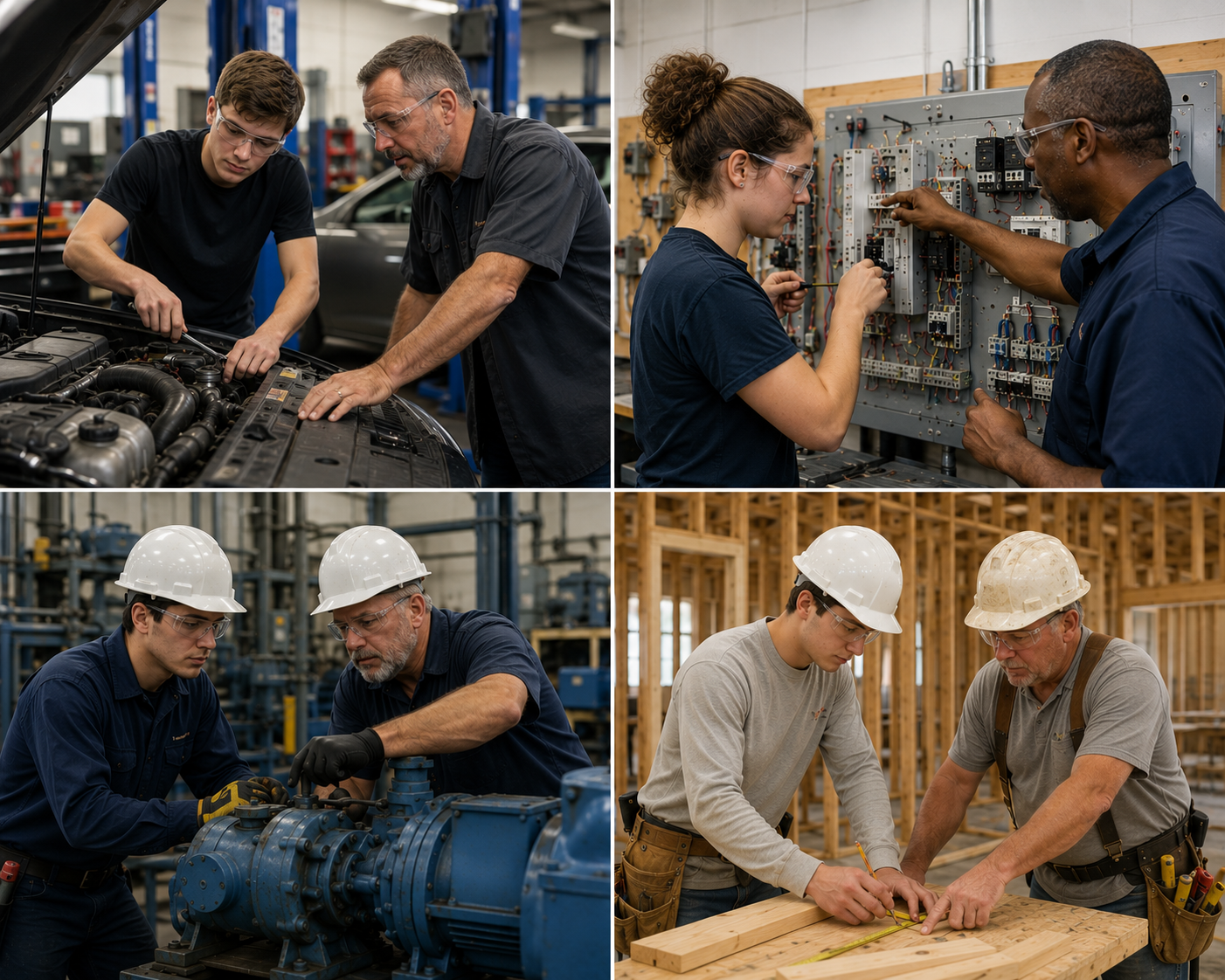
Apprenticeship Systems: Structured Entry PathwaysApprenticeships remain one of the oldest workforce development models, yet many continue producing workers effectively. Union apprenticeship programs provide one example.
These systems typically combine classroom instruction, paid work experience, progressive skill development, mentorship, and clearly defined advancement pathways. Workers understand expectations. Employers understand competency requirements. Progression is structured rather than random.
Perhaps most importantly, workers earn income while learning. This changes the economics of workforce development. Students frequently avoid large educational debt burdens while building practical experience simultaneously. Construction apprenticeship systems demonstrate similar strengths.
Many construction trades developed workforce pipelines around long-term mentorship models. Workers progress through structured stages while accumulating both classroom knowledge and field experience. Competency develops alongside productivity rather than separately.
The lesson is not necessarily that every industry requires traditional apprenticeships. The lesson may be that structured pathways reduce friction. Workers are more likely to remain when expectations, progression, and support systems are visible.
Industrial Maintenance: Multi-Skill DevelopmentIndustrial maintenance programs offer another interesting example.
Modern industrial facilities increasingly require workers capable of operating across multiple disciplines: mechanical systems, electrical systems, controls, automation, diagnostics, and software. Many successful industrial programs respond by training broadly rather than narrowly. Students learn overlapping competencies. Employers develop adaptable workers.
Training systems increasingly mirror real workplaces where specialization still exists—but cross-functional knowledge creates resilience. This becomes increasingly important as technical complexity expands across industries. The future workforce may require more integration between disciplines, not less.
European Models: Earlier Integration Between Education and IndustrySeveral European workforce systems approach technical education differently than the United States. Students often encounter technical pathways earlier. Industry partnerships are frequently more formalized. Work-based learning is integrated more directly into educational systems. Transitions between school and employment are often less fragmented.
These systems are not perfect. Some create challenges involving specialization timing, workforce flexibility, or mobility. However, they highlight an important principle: Educational systems function more effectively when employers actively participate in workforce development rather than waiting for finished workers to appear.
Military Technical Training: Clear Expectations and Immersive LearningMilitary technical training offers another perspective.
Military workforce systems frequently compress learning timelines through structured environments, standardized instruction, mentorship layers, and clearly defined competency expectations.
Workers know what success looks like.
Training sequences are standardized.
Hands-on experience occurs rapidly.
Advancement pathways remain visible.
Not every element transfers easily to civilian workforce systems. But the model demonstrates how immersive learning environments can accelerate competency development when support structures remain strong.
Common Characteristics of Successful Workforce SystemsDespite their differences, effective workforce systems often share surprisingly similar traits.
They provide structured progression.
They integrate work and learning.
They create clear expectations.
They reduce financial barriers.
They emphasize mentorship.
They build relationships between education and employers.
Most importantly, they treat workforce development as an ongoing system rather than a one-time recruiting activity. This raises an important question. What systems consistently produce workers?
Increasingly, the answer appears less connected to industry type and more connected to system design. Strong workforce systems do not simply recruit people.
They guide people.
Train people.
Support people.
Retain people.
And perhaps that distinction explains why some industries continue building pipelines while others increasingly struggle to maintain them. Because successful workforce development may depend less on finding workers—and more on building systems designed to create them.
What Solutions Actually Look Like
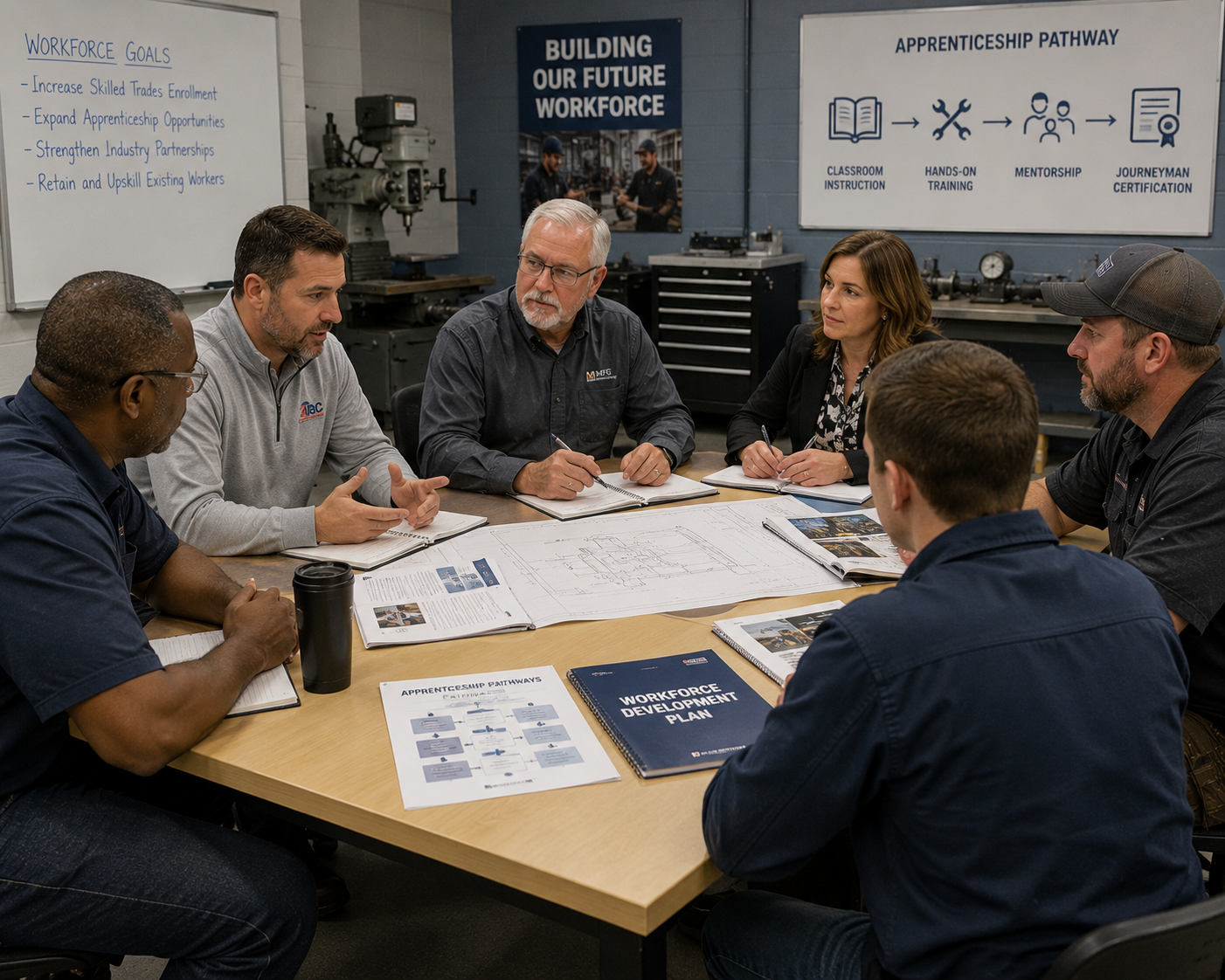
After examining labor shortages across multiple industries, one conclusion becomes difficult to avoid. There is unlikely to be a single solution.
Shortages developed through years of cultural shifts, economic changes, educational gaps, demographic pressures, and technological disruption. Solutions that work at scale will likely require the same level of complexity.
This creates both good news and bad news. The bad news is that quick fixes rarely work. The good news is that workforce systems can be improved at multiple points simultaneously.
Effective solutions generally fall into four categories: recruitment, training, retention, and industry collaboration.
Recruitment Solutions: Expanding the Top of the FunnelMost industries cannot solve workforce shortages if too few people enter the pipeline. Recruitment therefore matters—but recruitment means more than advertising jobs.
Exposure often starts too late. Many students make educational decisions long before meaningful career exploration occurs. By the time employers begin recruiting, large portions of the potential workforce have already selected different paths. Earlier exposure creates more opportunities. Career awareness programs, technical demonstrations, workplace visits, internships, job shadowing, youth apprenticeships, and direct employer engagement all increase visibility. Students rarely pursue careers they never see.
Screening also deserves more attention. Workforce development frequently focuses on filling seats rather than matching people to careers where they are likely to succeed. Better assessment systems—including aptitude evaluations, personality fit, work readiness measurements, and realistic job previews—can improve placement quality and reduce avoidable attrition.
Recruitment should not simply maximize participation. It should improve alignment.
Training Solutions: Reducing the Distance Between Learning and WorkTraining pipelines frequently struggle because education and employment remain too disconnected. Workers learn. Then graduate. Then attempt to become productive.
Many industries increasingly need systems where learning and productivity occur simultaneously. Apprenticeship models provide one pathway.
Paid learning environments reduce financial barriers while increasing practical experience. Apprenticeships also create structured progression, allowing workers to develop competency through repetition and mentorship rather than isolated classroom instruction.
Employer-led education offers another opportunity. Employers often understand changing technologies faster than educational institutions because they experience those changes directly. Strong partnerships between industry and education can shorten update cycles, improve curriculum relevance, and create more direct transitions into employment.
Faster pathways also matter. Long training programs are not always better training programs. Breaking education into stackable credentials, modular learning blocks, competency-based progression, and shorter entry pathways may allow workers to begin contributing earlier while continuing development over time. Workforce systems improve when learning becomes continuous rather than front-loaded.
Retention Solutions: Keeping Workers Matters More Than Replacing ThemRetention remains the least discussed—and often most important—part of workforce development. Recruiting workers repeatedly becomes expensive. Retaining workers compounds value.
Mentorship systems consistently appear in successful workforce models because transition periods remain fragile. New workers frequently leave during the earliest stages of employment when expectations, confidence, and competency are still developing.
Mentors reduce uncertainty. They accelerate learning. They improve belonging. And they frequently improve retention.
Compensation structures matter as well. Higher pay alone may not solve shortages, but compensation systems that feel unfair, unpredictable, or disconnected from effort frequently accelerate turnover.
Workers generally tolerate difficult jobs more easily when progression feels achievable. Career ladders create that progression. Workers who understand what advancement looks like—and how to achieve it—are more likely to remain engaged long enough to reach it.
Retention is ultimately about sustainability. People remain in careers that feel survivable.
Industry Solutions: Moving From Competition to CollaborationPerhaps the hardest solution category involves cooperation. Many industries approach workforce development competitively. Recruit from competitors. Hire experienced workers. Offer bonuses. Repeat.
This strategy reallocates workers. It does not necessarily create more workers. Shared responsibility models may work better.
Industry partnerships allow employers to distribute recruiting efforts, training investments, curriculum development, mentorship responsibilities, and operational costs. Shared training costs reduce barriers for smaller employers. Shared recruiting expands reach. Shared educational partnerships improve scale. Collaboration can also reduce duplication.
Ten employers independently building ten workforce systems may be less effective than ten employers contributing to one stronger system.
This requires a mindset shift. Workforce development is often treated like procurement: identify needs, purchase labor, continue operating. Increasingly, workforce development may need to function more like infrastructure. Infrastructure requires maintenance. Investment. Coordination. Long-term planning.
The same may now be true for labor pipelines. Because industries that continue waiting for workers to appear may discover that workforce shortages are not temporary disruptions. They are becoming operating conditions. And operating conditions require systems designed to endure them.
The Bigger Question
Throughout this discussion, one theme repeatedly emerges. The workforce problem extends far beyond labor shortages. It increasingly raises questions about capacity. Modern society depends on systems most people rarely think about:
Electricity arrives when needed.
Clean water flows continuously.
Vehicles operate reliably.
Homes remain climate controlled.
Roads get repaired.
Manufacturing plants continue producing.
Data centers process information.
Supply chains move products.
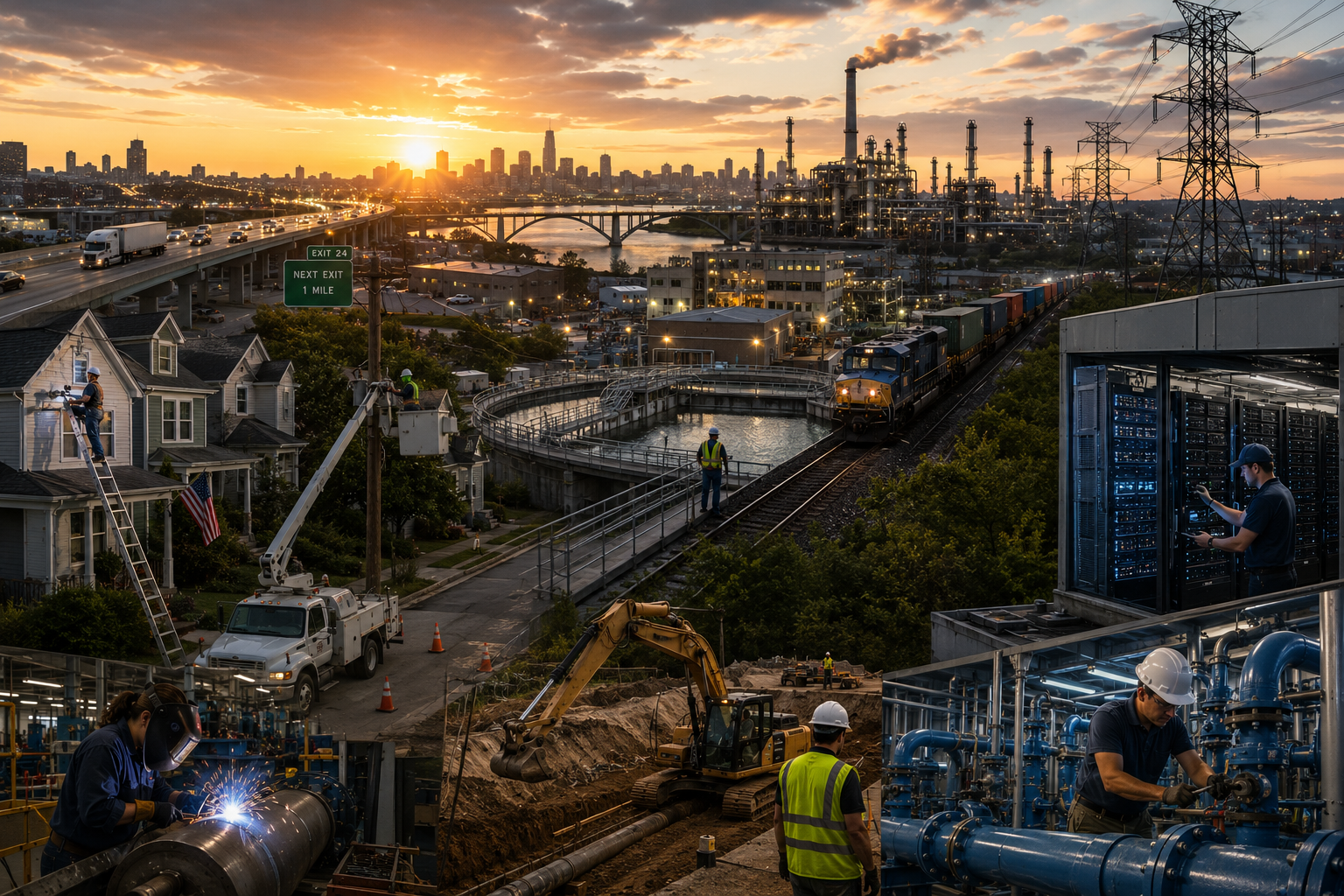
Behind each of these systems are workers responsible for building, maintaining, repairing, upgrading, and operating increasingly complex infrastructure. The question is not simply whether shortages exist. The larger question may be: Who maintains increasingly complex society?
Complexity creates dependency. Modern vehicles contain advanced electronics, software, networks, sensors, and increasingly autonomous systems. Buildings integrate automation, controls, smart technologies, and higher efficiency requirements. Industrial equipment becomes more interconnected. Infrastructure becomes more sophisticated. Energy systems become more distributed.
As complexity expands, labor requirements often shift toward higher skill levels rather than disappearing. This creates another challenge. What happens when shortages begin stacking together?
A housing shortage intersects with construction labor shortages.
Electrical shortages affect infrastructure expansion.
Manufacturing shortages influence supply chains.
Transportation shortages influence repair capacity.
Energy projects compete for labor already needed elsewhere.
Workforce shortages rarely remain isolated problems. Increasingly, they overlap. When shortages stack together, bottlenecks emerge. This creates an even larger economic question.
What happens when skilled labor becomes the bottleneck for growth? Historically, growth constraints often centered around capital, materials, technology, or demand. Increasingly, workforce capacity itself may become the limiting factor.
A company can purchase equipment.
A contractor can secure financing.
A municipality can approve projects.
An industry can create demand.
None of those guarantee enough skilled workers exist to execute the work. Labor capacity increasingly influences how quickly societies can build, modernize, repair, and expand.
This changes how workforce shortages should be viewed. These are not only employment problems.
They are infrastructure problems.
They are productivity problems.
They are competitiveness problems.
And perhaps most importantly, they are strategic problems.
Because labor shortages are no longer affecting isolated sectors. They increasingly influence the speed at which entire industries evolve. The encouraging reality is that workforce systems are not fixed. Industries have redesigned supply chains. They have redesigned manufacturing systems. They have redesigned technology platforms. Workforce systems can be redesigned too.
But redesign requires acknowledging that labor pipelines are not self-sustaining. They require investment. Coordination. Training. Mentorship. Long-term planning.
The industries that solve workforce development first may not simply solve labor shortages. They may reshape their future competitiveness. And in an economy increasingly constrained by skilled labor, competitiveness may depend less on who builds the best products—and more on who builds the best workforce systems.